Does a tattoo hurt? A pain map by body area
Yes, it hurts, but it’s bearable, and the difference between "barely anything" and "grit your teeth" comes down to where on the body it is. Here’s where it hurts more, what it depends on and how to make the session easier.
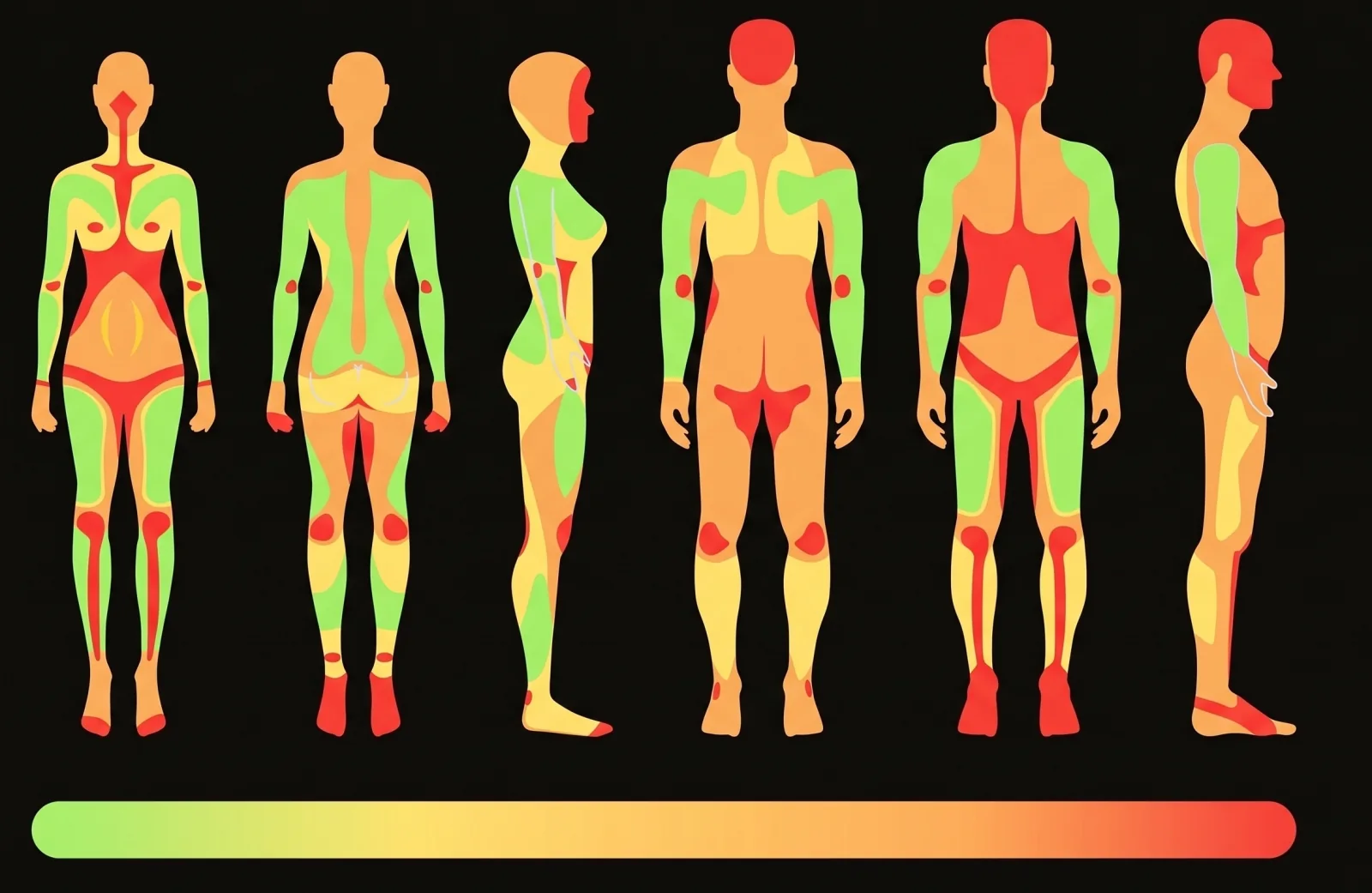
In short
- On a scale of 1 to 10, most areas sit at 3–5: unpleasant, but you can hold a conversation.
- Outer forearm and upper arm, outer thigh, calf and shoulder blades are the calmest spots.
- Ribs, spine, feet, hands and fingers, elbow and knee, inner thigh: that is where it hurts most.
- Fine line is usually easier to sit through: thin needles, short sessions. But placement matters more than technique.
- Sleep, a meal an hour before and no alcohol the day before solve half the problem.
It is the number one question at every consultation, and it is a fair one. I will not tell you it "doesn't hurt at all": the needle enters the skin thousands of times a minute and the body notices. But pain has a map, and with it you can choose the placement, the size and how the session goes.
Below: what it depends on, where on the body it is bearable and where you will need to brace, and what you can do in advance so the session goes calmly.
What decides how much it hurts
It comes down to four things, and they add up.
- Placement. The main factor. Where bone sits close under the skin, where the skin is thin and packed with nerve endings, it hurts more. Where there is a thick layer of muscle and fat, less. The same needle on the outer upper arm and on the ribs feels like two different sessions.
- Technique. A line with a thin needle is a sharp, pinpoint, but short signal. Shading and solid fill are less sharp, but the needle passes over one spot many times and after an hour the skin "gets tired". Fine line is almost entirely the first kind.
- Session length. For the first half hour the body runs on adrenaline and it is easy. After two or three hours it runs out, and what was a three at the start becomes a six. That is why I split large pieces into sessions.
- Your condition. Lack of sleep, hunger, a hangover, stress and dehydration raise sensitivity noticeably. This is the one item that is entirely in your hands.
The pain map by area
Below is the average picture. Everyone’s threshold is different: some people sit through ribs calmly and some struggle with a forearm. But the order of areas from easy to hard is the same for most people.
Calm areas (2–4 out of 10). Outer forearm, outer upper arm, outer thigh, calf, upper back and shoulder blades. Plenty of muscle, firm skin, bone far away. This is where I recommend a first tattoo: for how it feels, and because work there is well visible and ages well.
Medium (4–6). Inner forearm, inner bicep, lower back, sides of the chest, side of the neck, the shin over the muscle. Bearable, but you feel it, especially closer to the joints.
Hard (6–8). Ribs, sternum, spine, collarbones, feet and ankles, hands and fingers, elbow and knee, armpit, inner thigh and behind the knee, front of the neck. Bone under the skin, nerves nearby, thin skin. These get short sessions with breaks.
A separate note on hands and fingers: it is not only more painful there, the pigment also holds worse, the skin constantly renews and rubs. If you want a small piece "somewhere visible", the forearm beats the finger on every count except one: it is not a finger.
Does a fine line tattoo hurt
Fine line is easier to sit through than dense realism, for three reasons. The needles are thinner and damage the skin less. The work is mostly linework, without long shading passes over one spot. And the session is short: a small piece takes about an hour, a medium one about three.
There is a catch, though. Small, delicate motifs are most often requested exactly for the "hard" places: fingers, the inside of the wrist, ribs, the top of the foot. And then placement outweighs technique. Fine line on the ribs hurts like ribs, not like fine line.
How fine line and black & grey differ beyond that, and which style to choose, I have written up separately in the article on styles.
What to do before the session
- Sleep. Lack of sleep raises sensitivity more than anything else on this list.
- Eat an hour to ninety minutes before. A proper meal, but not a heavy one. On an empty stomach your blood sugar drops, and your patience with it. For a long session bring something sweet and water.
- No alcohol for 24 hours. It thins the blood: you bleed more, the pigment settles worse, and it hurts more, not less. A hangover adds all of it at once.
- No painkillers. Aspirin and ibuprofen thin the blood too. If anything, paracetamol, but best nothing.
- Clothes. Loose, so the spot can be uncovered without undressing completely, and nothing you would miss: pigment does not wash out well.
- Tell me how you are doing. Your period, a cold, a fresh sunburn, blood pressure: not a reason to cancel, but a reason to adjust the plan.
Numbing cream: yes or no
Lidocaine creams exist and they work: applied an hour ahead, they take the edge off for one to two hours. But they have a price. Skin under the cream changes density and turns "rubbery", pigment settles into it differently, and when the effect wears off mid-session the contrast hits harder than if there had been no cream at all.
So my answer: for short sessions on calm areas you do not need it, and for hard areas it is a conversation at the consultation, not a decision on the day. If you want to use a cream, tell me in advance and I will tell you which one and how.
What the session is like
The first minutes are the strangest, then the body gets used to the rhythm and it gets easier. Breathe evenly and do not hold your breath: when you hold it, muscles tense and the pain grows. You can talk, listen to music, look at your phone.
Breaks are normal. Five minutes once an hour: stand up, drink, stretch. On long pieces I suggest them myself.
If you feel unwell: vision going dark, nausea, cold sweat, say so immediately. It is a vasovagal reaction, not dangerous, but you need to lie down and eat something sweet right away, not "push through".
Does it hurt afterwards
For the first day or two the area feels like sunburn: hot, sensitive to touch, slightly swollen. That is normal and passes on its own. On day three or four the itching starts, and that is normal too; the main thing is not to scratch.
What to do in the first weeks, when to remove the film and which signs should worry you are in the aftercare guide.
Not sure which style? I break down the difference between fine line and black & grey in a separate article. How to choose an artist without regretting it is here.